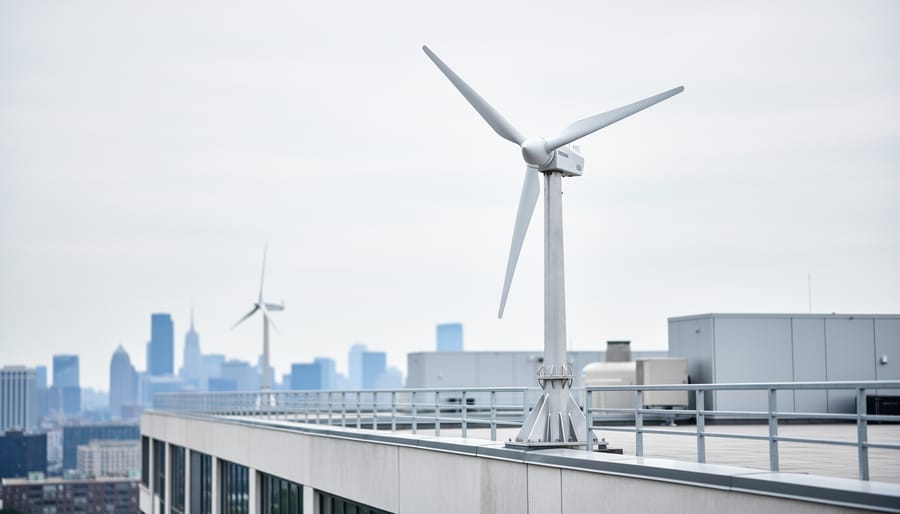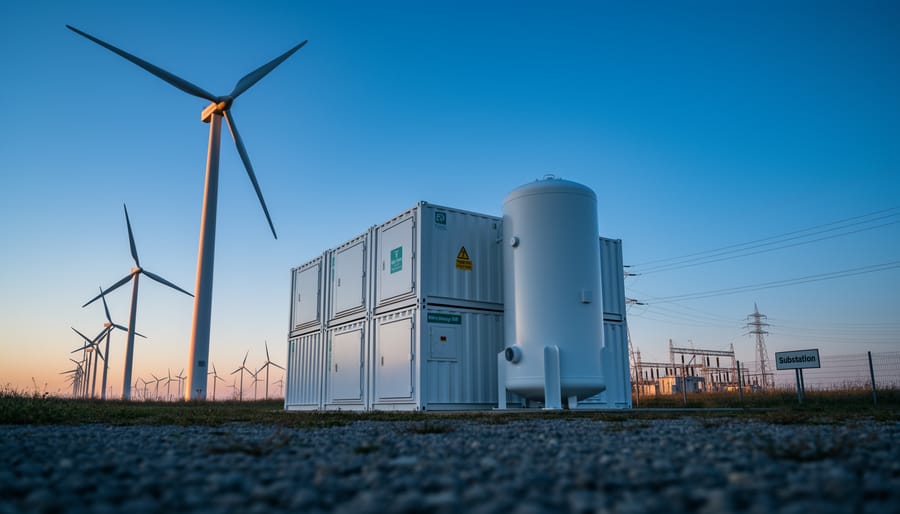
Repowering wind turbines involves replacing aging components or entire turbines with modern, more efficient equipment to extend a wind farm’s operational life and boost energy output by 20 to 50 percent. This strategic upgrade transforms underperforming assets into high-yield installations while maintaining existing grid connections, land agreements, and permits that took years to secure. For wind farm operators facing turbines that have reached their 15 to 20-year design life, repowering offers a faster, more cost-effective path to enhanced performance than building new sites from scratch.
The process typically spans 12 to 18 months from initial assessment through commissioning. It demands careful coordination across engineering teams, regulatory bodies, and construction crews. Most projects focus on one of three approaches: partial repowering, which updates specific components like blades or gearboxes; full turbine replacement with larger, more productive units on existing foundations; or complete site overhauls that may reduce turbine count while increasing total capacity.
Wind farm operators who execute repowering projects effectively capture significant environmental benefits by maximizing renewable energy generation on already developed land. The financial case strengthens as turbine technology advances. Modern units deliver substantially higher capacity factors while benefiting from simplified maintenance requirements and extended warranties.
This guide walks through each phase of a repowering project, from technical assessment and permit navigation to equipment installation and performance verification, giving decision-makers the framework needed to plan and execute successful upgrades.
What is Wind Turbine Repowering?
Wind turbine repowering is the comprehensive replacement of aging wind turbines with newer, more efficient models, often on the same site using existing infrastructure where feasible. This goes well beyond routine maintenance or part swaps. You’re essentially installing a new generation of technology that can dramatically increase energy production while reducing operational costs.
The term “repowering” gets used loosely in the wind industry, but it specifically means removing old turbines entirely and installing new ones. This differs fundamentally from two other upgrade strategies. Retrofitting involves upgrading specific components like blades, gearboxes, or control systems while keeping the core turbine structure intact. Life extension focuses on maintaining and refurbishing existing equipment to safely operate beyond its original design life, typically 20-25 years.
Understanding the distinction between repowering versus retrofitting matters because they deliver vastly different outcomes. A retrofit might boost output by 10-20% through better blades or updated controls. Full repowering can double or triple a site’s capacity by installing modern turbines with taller towers, longer blades, and advanced generators that capture more energy from the same wind resource.
Repowering makes most sense when your turbines have reached 15-20 years of operation, maintenance costs are climbing steeply, and newer technology offers substantial capacity improvements. The existing site infrastructure, roads, grid connections, land agreements, becomes a valuable asset that reduces the cost and complexity compared to developing an entirely new wind farm from scratch.
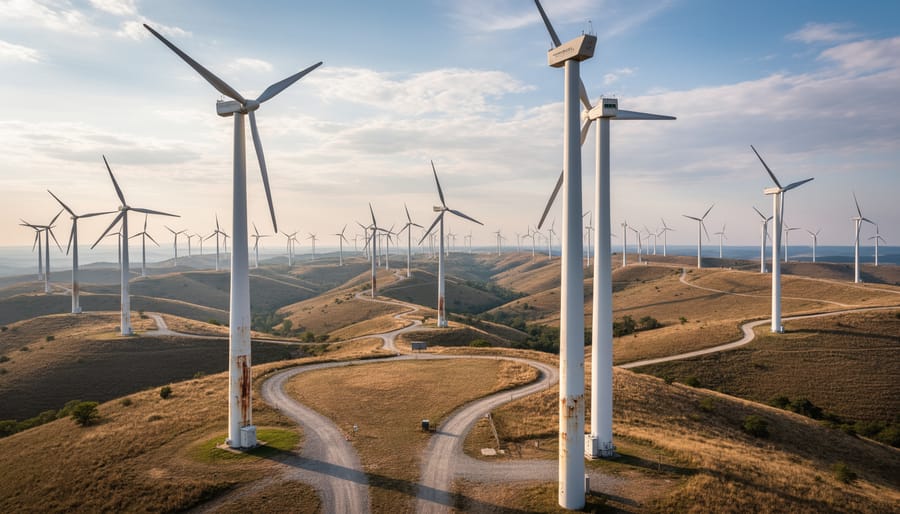
When to Consider Repowering Your Wind Turbines
Several clear indicators reveal when repowering makes more financial and operational sense than continuing maintenance on aging turbines. Understanding these signals for repowering helps operators time their investment for maximum return while avoiding the escalating costs and reliability issues that come with outdated equipment.
Age stands as the most obvious factor. Turbines nearing or exceeding their 20-25 year design life typically face accelerating component failures, even with diligent maintenance. As parts become obsolete and harder to source, downtime extends and repair costs climb sharply. When a major component like a gearbox or generator requires replacement on an aging turbine, the economics often tip toward full repowering rather than investing in a machine with limited remaining life.
Mounting maintenance expenses signal repowering readiness. If annual maintenance costs exceed 3-4% of the original turbine value, or if you’re seeing frequent unplanned outages, the cost comparison between ongoing repairs and new equipment shifts decisively. Modern turbines require significantly less maintenance and offer longer component warranties, transforming the operational budget.
Key assessment criteria include:
- Capacity factor dropping below 25-30% compared to 35-45% for modern turbines in similar wind conditions
- Availability falling below 95% due to frequent breakdowns and extended repair times
- Power purchase agreement approaching expiration, allowing renegotiation at higher rates with increased capacity
- Access to improved incentives or favorable regulatory changes that enhance project economics
- Foundation assessments confirming structures can support larger, more productive turbines
Technological obsolescence drives many repowering decisions. A wind farm with 1.5 MW turbines from the early 2000s can often be replaced with 4-6 MW turbines on the same site, doubling or tripling energy production. Denmark’s Klim wind farm illustrates this perfectly. Operators replaced 150 aging turbines with just 21 modern machines, increasing total capacity from 45 MW to 63 MW while reducing the number of units requiring maintenance by 85%.
Consider repowering when grid connection agreements allow capacity increases without lengthy reapplication processes, or when local communities support consolidating many small turbines into fewer, more efficient units that reduce visual impact.
Tools and Materials Needed for Repowering
Personnel and Expertise Requirements
Successful repowering demands a multidisciplinary team of highly qualified professionals. At the core, you’ll need structural engineers to assess foundation integrity, evaluate load-bearing capacity for larger turbines, and design any necessary reinforcements. Electrical engineers specializing in renewable energy are essential for managing grid connections, ensuring proper 3-phase wiring systems, and integrating new control technologies with existing infrastructure.
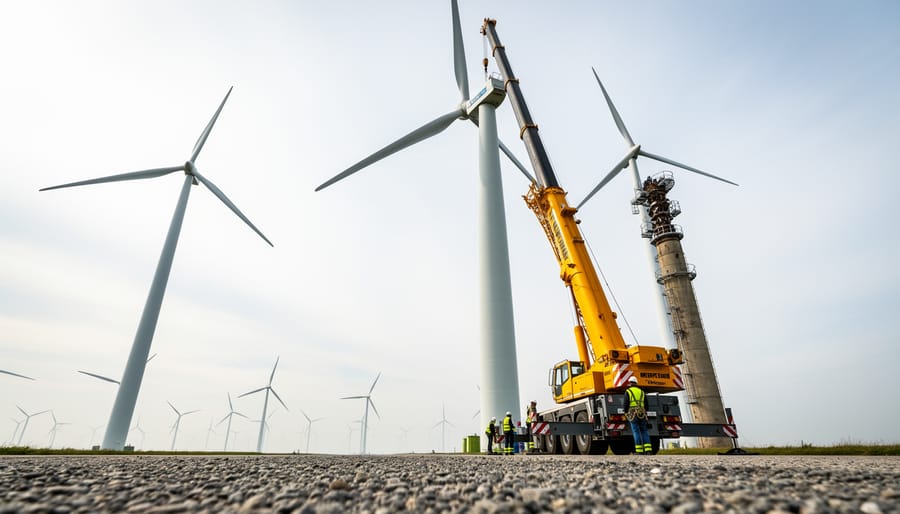
Certified crane operators with wind industry experience handle the delicate work of removing old components and installing new towers, nacelles, and rotor blades, often at heights exceeding 100 meters. Wind turbine technicians certified by organizations like the Global Wind Organisation (GWO) perform mechanical assembly, electrical connections, and safety procedures at elevation.
Beyond these core roles, you’ll typically require project managers experienced in renewable energy construction, environmental consultants to ensure compliance throughout the process, and commissioning specialists who verify that new turbines meet manufacturer specifications and grid requirements. For larger projects, having a health and safety officer dedicated to the site prevents accidents and maintains regulatory compliance. The right team makes the difference between a smooth repowering and costly delays.
Safety Considerations and Regulations
Repowering projects demand rigorous safety protocols because they combine the risks of decommissioning aging infrastructure with installing new equipment at height. Workers face hazards from electrical systems, heavy machinery operation, and working at extreme elevations, often exceeding 80 meters. Before any work begins, develop a comprehensive safety plan that addresses lockout-tagout procedures for electrical systems, fall protection requirements, and crane operation protocols. All personnel must be certified for wind turbine work and trained on the specific equipment being used. Grid disconnection is non-negotiable: coordinate with your transmission system operator to fully isolate the turbine from the electrical grid, verify zero energy state with proper testing equipment, and maintain visible isolation points throughout the project.
Regulatory compliance starts with understanding your jurisdiction’s requirements, which vary significantly between regions. Most repowering projects require updated environmental impact assessments, even when using existing foundations, because modern turbines alter noise profiles, shadow flicker patterns, and bird collision risks. The offshore wind permitting steps outlined by authorities like NYSERDA demonstrate the multi-agency coordination needed, though onshore projects typically face fewer layers. You’ll need building permits for structural modifications, aviation clearance if turbine heights increase, and environmental permits addressing the environmental footprint during construction. Local noise ordinances often require updated assessments since newer turbines operate differently than older models. Budget 6-18 months for permitting depending on location, coastal and ecologically sensitive sites face longer timelines. Work with experienced permitting consultants who understand your region’s requirements, and engage with community stakeholders early to address concerns before they become regulatory obstacles.
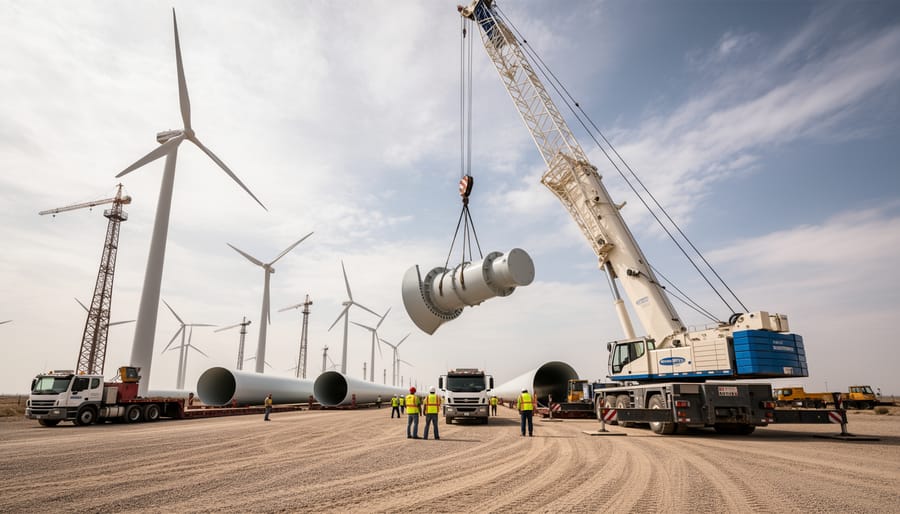
Step-by-Step Repowering Process
Step 1: Site Assessment and Feasibility Study
Begin your repowering project by conducting a comprehensive site assessment that examines three critical areas: wind resources, existing infrastructure, and economic potential.
Start with wind resource analysis using at least 12 months of updated meteorological data from your existing turbines’ SCADA systems. Modern turbines operate at taller hub heights than older models, so supplement this with wind shear calculations and atmospheric modeling to predict performance at new rotor elevations. Industry best practice requires LiDAR measurements at proposed hub heights to confirm wind speed increases and reduce uncertainty in energy production forecasts.
Next, evaluate your existing infrastructure. Commission a structural engineer to inspect foundations for load-bearing capacity, many older foundations can support larger turbines with reinforcement, saving substantial costs. Assess access roads for weight limits and width restrictions that accommodate modern delivery trucks and cranes. Document electrical infrastructure including substation capacity, transformer ratings, and grid connection capabilities.
Finally, model the economic case by comparing projected energy output gains against total project costs, including decommissioning, installation, and any required infrastructure upgrades. Calculate the payback period and internal rate of return using current power purchase agreement rates or wholesale electricity prices in your market.
Step 2: Planning and Design Selection
Once your feasibility study confirms repowering is viable, the next phase involves making critical decisions about turbine selection, site configuration, and project financing. Start by evaluating modern turbine models that match your site’s wind characteristics and spatial constraints. Today’s larger turbines typically feature rotor diameters of 140-170 meters and hub heights exceeding 100 meters, but your choice depends on wind regime data, grid capacity, and foundation reusability. Work with turbine manufacturers to compare power curves, capacity factors, and maintenance packages, a 5MW turbine might generate more energy than three older 2MW units while occupying the same footprint.
Site layout optimization follows turbine selection. Use wake modeling software to determine optimal spacing that minimizes turbine interference while maximizing the existing road network and electrical infrastructure. Plan for construction access routes that accommodate 60-meter blade transport and 1,200-tonne crane requirements.
Logistics planning includes coordinating turbine delivery schedules, crane availability, and weather windows for installation. Simultaneously, secure project financing by presenting updated energy yield projections and return-on-investment calculations using renewable financial models that account for improved capacity factors, reduced maintenance costs, and extended operational lifespans of 25-30 years.
Step 3: Permitting and Grid Connection Approval
Securing permits and grid approvals is often the most time-consuming phase of repowering, typically requiring 6-18 months depending on jurisdiction complexity. Start by identifying all regulatory authorities involved, local planning departments, environmental agencies, aviation authorities, and your grid operator. Submit applications early and simultaneously where possible to avoid sequential delays.
Environmental clearances demand particular attention. You’ll need updated environmental impact assessments covering noise, shadow flicker, wildlife (especially birds and bats), and visual impact studies. Many jurisdictions require public consultation periods, so budget time for community meetings and addressing objections.
Grid connection approval involves technical studies proving your new turbines won’t destabilize the network. The grid operator will evaluate voltage stability, fault levels, and protection coordination. Submit detailed electrical specifications, protection schemes, and power quality studies. Negotiate connection agreements that define export capacity, metering arrangements, and any required grid reinforcement costs, these can significantly impact project economics if you’re increasing total capacity beyond your original agreement.
Step 4: Decommissioning Existing Turbines
Decommissioning begins with a controlled shutdown sequence that isolates the turbine from the grid and locks out all electrical systems. Technicians drain hydraulic fluids, lubricants, and coolants according to environmental regulations, capturing these materials for proper disposal or recycling. The process typically starts at the top, with crane teams removing rotor blades individually, a delicate operation requiring calm weather and precise rigging to prevent damage to surrounding turbines.
Once blades are on the ground, crews dismantle the nacelle, which houses the generator, gearbox, and drivetrain. These components contain valuable materials like copper windings, rare earth magnets, and steel alloys that specialized recyclers can reclaim. The tower sections come down next, cut into transportable segments if they’re concrete or unbolted if tubular steel.
Foundation assessment happens concurrently. Engineers inspect the existing concrete base for cracks, reinforcement corrosion, and load-bearing capacity. If the foundation meets specifications for the new turbine’s weight and height, it can often be reused with modifications, saving significant cost and carbon emissions. When foundations show deterioration, they’re either reinforced with additional concrete and rebar or excavated entirely. Modern repowering contracts typically require at least 90% material recycling, with steel components melted for reuse and composite blades increasingly processed into cement kiln fuel or shredded for construction aggregate.
Step 5: Foundation Modification or Replacement
The foundation beneath your aging turbine determines whether you’ll save hundreds of thousands or build from scratch. Start by commissioning a structural engineer to evaluate the existing concrete base through non-destructive testing, ground-penetrating radar reveals internal cracks, while core samples confirm concrete strength hasn’t degraded below specifications. Load calculations must account for the new turbine’s weight, blade diameter, and wind loading, which can exceed the original design by 30-50% in modern models.
If the foundation passes inspection and the structural capacity matches requirements, reinforcement offers the most cost-effective route. Engineers typically prescribe additional rebar anchors drilled into existing concrete, perimeter strengthening with fiber-reinforced polymer wraps, or extending the foundation diameter with new concrete poured around the original base. This approach cuts costs by 40-60% compared to full replacement.
Complete reconstruction becomes necessary when foundations show significant deterioration, weren’t built to modern seismic codes, or simply can’t handle the increased loads. Demolition requires breaking up the old concrete, often 300-500 cubic meters per turbine, and excavating deeper for larger footprints. New foundations cure for 28 days minimum before tower installation begins, extending your project timeline but ensuring decades of reliable service.
Step 6: Installing New Turbines
Installing new turbines is the most visible and technically demanding phase of repowering. The process typically takes three to five days per turbine under favorable weather conditions, though complex sites may require longer.
Tower erection begins with positioning and bolting the bottom section to the prepared foundation. Large crawler cranes then lift successive tower sections into place, aligning bolt holes with precision. Each section is secured with high-strength bolts torqued to manufacturer specifications. Workers inside the tower install internal ladders, cable trays, and safety systems as erection progresses.
Once the tower reaches full height, the nacelle is lifted and carefully positioned atop the tower. This single lift often weighs 80-100 tons and requires calm conditions (wind speeds below 25 mph). The nacelle houses the generator, gearbox, and control systems. After securing it, technicians connect electrical cables and hydraulic lines running up through the tower.
Rotor assembly follows. The hub is attached to the nacelle, then each blade is lifted individually and bolted to the hub. Modern blades can exceed 60 meters, making these lifts extremely sensitive to wind conditions.
Finally, electrical crews connect the turbine to the collection system and verify all connections before commissioning.
Step 7: Testing and Commissioning
After the new turbines are installed, systematic testing validates every system before connecting to the grid. Start with electrical testing: certified technicians use insulation resistance testers and power quality analyzers to verify all circuits, transformers, and switchgear meet specifications. They check grounding systems, measure voltage levels at multiple points, and confirm SCADA connections transmit data accurately.
Mechanical inspections follow. Engineers examine bolted connections with calibrated torque wrenches, inspect blade pitch systems through full range-of-motion tests, and verify lubrication levels in gearboxes and bearings. They run the turbine at low speeds to detect unusual vibrations using accelerometers mounted on key components.
Performance validation begins with grid synchronization tests. The turbine runs in parallel with the grid at low power, with technicians monitoring voltage, frequency, and phase alignment until stability is confirmed. Gradually increase power output while tracking generator performance against manufacturer specifications.
Finally, conduct a 72-hour continuous operation test where the turbine runs across varying wind conditions. Monitor power curves, capacity factors, and response to grid commands. Document any anomalies and resolve them before declaring the turbine fully commissioned. This methodical approach prevents costly failures and ensures optimal long-term performance.
Verification and Performance Monitoring
Once your new turbines are operational, rigorous verification ensures they deliver promised performance. Start by establishing baseline measurements during the first 30 days: track actual power output against manufacturer specifications under varying wind speeds, and compare capacity factors to your feasibility study projections. Modern SCADA (Supervisory Control and Data Acquisition) systems capture real-time data streams from each turbine, monitoring rotor speed, generator temperature, pitch angles, and power production at one-second intervals.
Key performance indicators and verification metrics you should track include:
- Capacity factor (actual output versus theoretical maximum over a defined period)
- Annual energy production (AEP) measured against pre-repowering baseline and projected targets
- Turbine availability (percentage of time operational versus downtime for maintenance or faults)
- Power curve verification (actual power output versus manufacturer’s certified curve at specific wind speeds)
- Grid integration metrics including voltage stability and power quality factors
Compare your repowered farm’s output to industry benchmarks: modern turbines typically achieve 95-98% availability and capacity factors between 35-50% depending on location. If actual performance falls more than 5% below projections, investigate potential issues such as suboptimal turbine placement, wake effects from neighbouring turbines, or blade degradation requiring early maintenance.
Integrate your monitoring system with energy storage solutions if applicable, tracking how effectively your upgraded farm manages variable output. Monthly performance reviews during the first year help identify patterns, seasonal variations, grid curtailment frequency, or component behaviour, that inform long-term operational strategies. Document any deviations and corrective actions taken; this creates valuable data for optimizing future repowering projects across your portfolio.

Real-World Repowering Success Stories
Germany’s Borkum-Riffgrund 1 offshore wind farm completed a landmark repowering project in 2024 that demonstrates the potential of strategic turbine replacement. The operator replaced 78 older 3.6 MW turbines with 40 modern 8 MW units, nearly doubling the farm’s total capacity from 312 MW to 420 MW while reducing the number of turbines by half. Project manager Henrik Stiesdal noted the foundation reuse challenge: “We discovered that 60 percent of existing foundations could support the heavier turbines after structural reinforcement, saving approximately €45 million in construction costs.” The project faced North Sea weather delays that extended the timeline by four months, but ultimately achieved a 94 percent capacity factor in its first year of operation, 15 percentage points higher than the original installation.
In Texas, the Sweetwater Wind Farm undertook a phased repowering between 2023 and 2025 that addressed land-use constraints common to onshore projects. The farm replaced 291 turbines with 107 larger units across five phases, maintaining partial operations throughout the process. Construction coordinator Maria Gonzalez emphasized logistics: “We had to maintain access roads for operational turbines while moving 200-ton components through the same corridors. Detailed traffic management and night-shift scheduling became critical.” The repowered facility increased annual output from 1,200 GWh to 1,850 GWh despite fewer turbines, and reduced operation and maintenance costs by 38 percent due to newer technology and warranty coverage.
Denmark’s Vindeby project, one of the world’s first offshore wind farms from 1991, completed full decommissioning and replacement in 2022 rather than component-level repowering. The project team chose complete removal after studies showed the original turbine platforms couldn’t accommodate modern weights. Chief engineer Lars Petersen reflected: “Sometimes repowering means accepting that starting fresh delivers better long-term value. We recycled 98 percent of the old turbine materials and designed new foundations that can support two future repowering cycles.” The new installation generates twelve times the energy of the original farm with half the turbine count, and the comprehensive approach eliminated the engineering compromises that partial repowering often requires.
Common Challenges and How to Overcome Them
Repowering projects rarely proceed without complications, but understanding common obstacles beforehand allows you to prepare effective countermeasures. Here’s how to navigate the challenges most teams encounter.
Supply Chain Disruptions and Component Delays
Global turbine manufacturers face extended lead times, often 18-24 months for new equipment, creating cascading effects on project schedules. Secure turbine orders early in your planning phase, ideally before finalizing permits, and build 6-9 month buffers into timelines. Establish relationships with multiple suppliers for non-critical components like cables and transformers. Some operators successfully negotiate equipment storage agreements with manufacturers to warehouse turbines until sites are ready, avoiding rushed installations.
Permitting and Regulatory Bottlenecks
Environmental reviews and local approvals can stretch far beyond initial estimates, particularly if your repowering changes turbine height or rotor diameter. Start permit applications 12-18 months before planned construction and maintain open dialogue with regulators throughout. Proactive community engagement reduces opposition, host informational meetings showcasing noise reduction and visual impact studies from similar projects. When permitting agencies request additional studies, respond promptly rather than disputing requirements; delays compound quickly.
Foundation Compatibility Issues
Existing foundations may not support modern turbines’ increased loads and torque requirements. Conduct detailed structural assessments using ground-penetrating radar and core sampling before committing to reuse strategies. When foundations prove inadequate, partial reinforcement with post-tensioned anchors costs 40-60% less than complete replacement while meeting safety standards. Budget contingency funds specifically for foundation work, it’s where unexpected costs most frequently emerge.
Grid Connection Capacity Constraints
Grid operators sometimes lack capacity for your repowered farm’s increased output, requiring costly substation upgrades or new transmission lines. Request preliminary interconnection studies during feasibility phases, not after ordering turbines. Consider phased commissioning that gradually increases capacity, allowing grid infrastructure improvements to proceed in parallel with your installation rather than sequentially.
Frequently Asked Questions About Wind Turbine Repowering
How much does wind turbine repowering typically cost?
Repowering costs vary widely based on project scope, but full turbine replacement generally ranges from $1.3 million to $2.5 million per megawatt of installed capacity. Partial repowering or component upgrades can cost 30-50% less, though the exact figure depends on turbine size, site conditions, foundation reuse potential, and local labor rates.
How long does a repowering project take from start to finish?
A complete repowering project typically takes 18-36 months from initial feasibility study to final commissioning. Permitting alone can require 6-12 months, while the physical decommissioning and installation phase usually spans 3-8 months depending on wind farm size and weather windows.
Can I repower with turbines from a different manufacturer?
Yes, you can switch manufacturers during repowering, though it often requires more extensive foundation modifications and electrical infrastructure changes. Staying with the same manufacturer or using turbines designed for the existing foundation type simplifies the process and reduces costs.
What is the expected return on investment for repowering?
Most repowering projects achieve payback within 7-12 years through increased energy production, reduced maintenance costs, and extended operational life. Modern turbines typically generate 50-100% more energy than the units they replace while qualifying for updated power purchase agreements at more favorable rates.
Beyond these common concerns, project-specific questions often arise around regulatory compliance timelines and technical compatibility between old and new systems. The permitting requirements vary significantly by jurisdiction, with some regions offering streamlined processes for repowering projects since they utilize existing wind farm sites rather than developing new locations. Environmental assessments are typically less extensive than for greenfield projects, though you’ll still need wildlife impact studies and aviation clearance.
Foundation compatibility deserves special attention because reusing existing foundations can save substantial costs but requires careful structural engineering analysis. The foundation must support the increased loads from larger, taller turbines, and any deterioration from decades of service needs thorough evaluation. Some projects successfully upgrade foundations rather than replacing them entirely, achieving cost savings of 15-25% compared to full replacement.
Repowering represents one of the most effective strategies for breathing new life into aging wind farms while advancing the clean energy transition. By replacing outdated turbines with modern, higher-capacity models, operators can double or even triple energy output from the same land footprint, maximizing the potential of proven wind resources without requiring new site development.
The success of any repowering project hinges on thorough planning and disciplined execution. From initial feasibility studies through final commissioning, each phase demands technical precision, regulatory diligence, and coordination across multiple specialized teams. The projects profiled throughout this guide demonstrate that when approached systematically, repowering delivers substantial returns in efficiency, reliability, and profitability.
As wind energy technology continues advancing and more first-generation turbines reach retirement age, repowering will become increasingly central to the industry’s growth. The global wind sector is maturing into a phase where optimization matters as much as expansion. This creates unprecedented opportunities for operators ready to upgrade their assets strategically.
Every wind farm presents unique conditions and challenges. Consulting with experienced repowering specialists ensures your project addresses site-specific factors, navigates regulatory complexities, and leverages the latest turbine technologies to achieve optimal results for your specific circumstances.